The Sprinkler Failure & Randy’s Delays
On January 16, 2026, the fire suppression system in the attic above Lucky Hare’s premises failed. Water poured into the restaurant. Our business shut down that day and has not fully recovered since.
What caused it
The fire suppression system is a "dry system" — meaning, by design, no water should ever be present in the supply pipes. When a dry system is properly maintained, there is nothing to freeze, nothing to rupture.
Building 2 at North Gate Station experienced a fire on September 15, 2023. Following that fire, the system was never properly restored to dry-system operation. Photographs taken on January 16, 2026 show yellow "NON-COMPLIANCE" tags affixed to the system riser — physical evidence that the system had known, flagged deficiencies that were never corrected. The system had been non-compliant before we moved in.
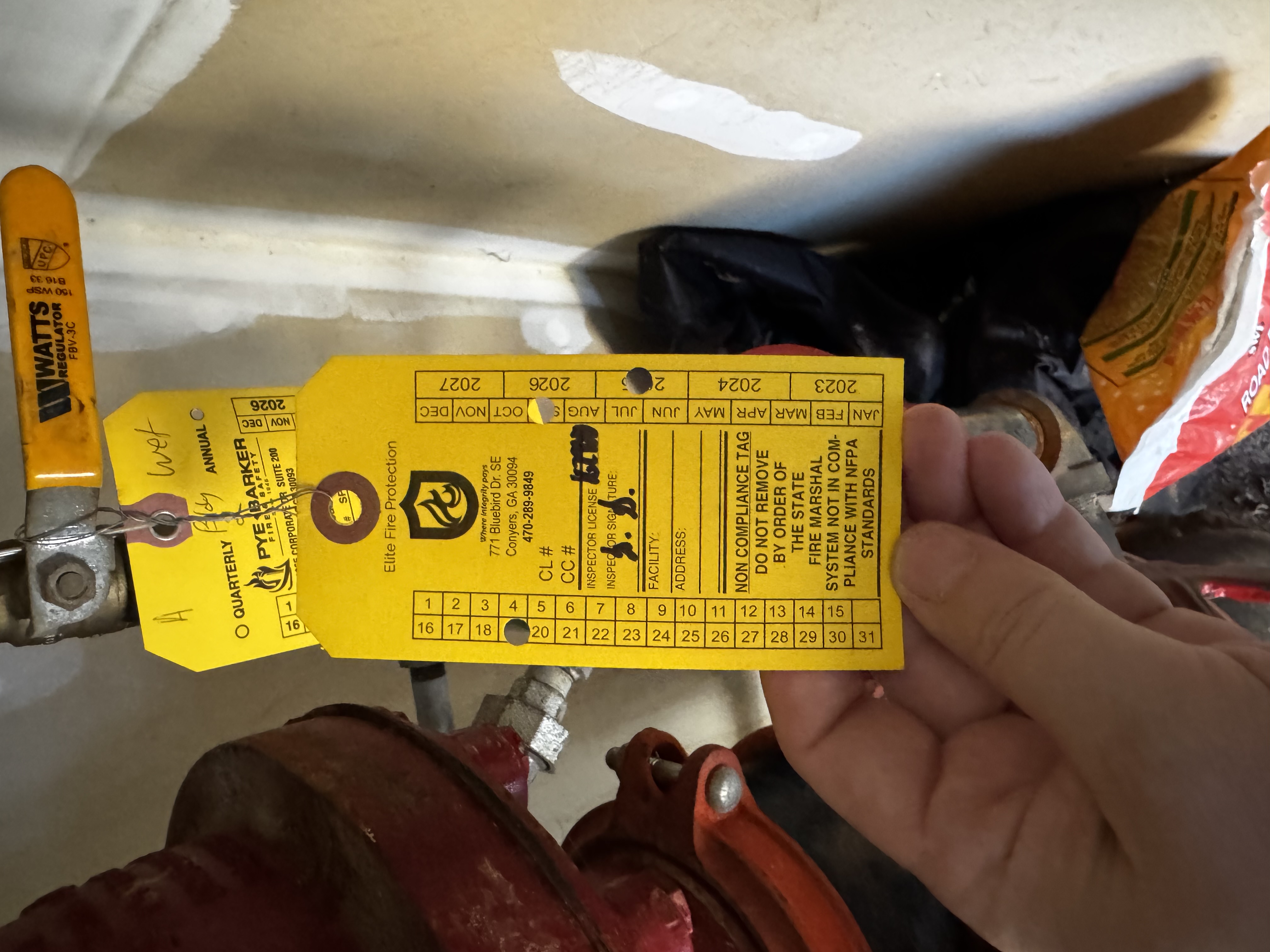
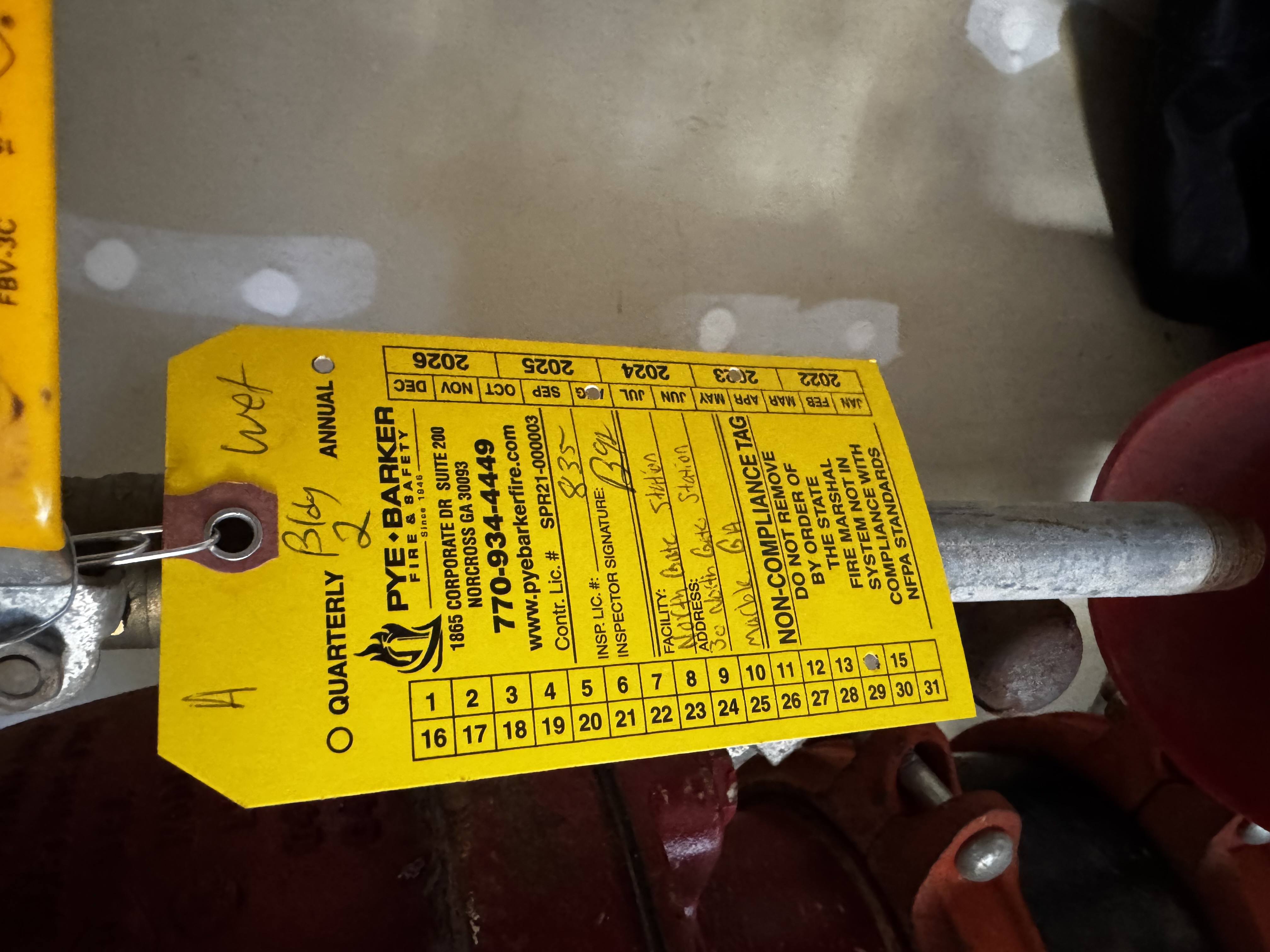
Because live water was in the pipes, and because those pipes were inadequately protected, the lines ruptured during a cold snap on the night of January 15–16, 2026. The video below was taken as water poured into our dining room.
What about the freeze claim?
Black Crow’s counsel argued in a February 5, 2026 letter that the rupture occurred because Lucky Hare failed to heat the premises adequately overnight. This is contradicted by the interior temperature records for the premises on January 16, 2026 — the inside of the restaurant never approached freezing.
The damage
| Category | Estimated Cost |
|---|---|
| Structural damage | $12,510.36 |
| Personal property damage | $31,456.96 |
| Total property damage | $43,967.32 |
Plus: ongoing lost business income during the closure period, in an amount to be proven at trial.
Randy’s response — or lack of one
We formally notified Black Crow on January 17, 2026 — the day after the flood. Randy Muecke visited the premises. Then, for weeks, nothing happened.
By February 4, 2026 — nearly three weeks after the flood — Black Crow had taken no action to repair the damage or remediate the premises, despite repeated written demands. Our attorneys sent a formal letter that day cataloging Black Crow’s inaction and demanding immediate response.
When we commissioned an independent engineering inspection in early March 2026, the Palmer Report identified that the sprinkler malfunction had caused direct structural damage to the front stud wall, sill plate, and exterior sheathing — requiring temporary roof shoring before any repair work could safely proceed. The report identified 10 categories of deficiencies, including active roof leaks, serious electrical hazards, and HVAC failures. Black Crow disputed the report and tried to use procedural objections to block and delay remediation further.
Black Crow received insurance funds to begin repairs in early February 2026. They did not begin work until March 30, 2026 — seven weeks later.
"The fire sprinkler system is a ‘dry system,’ meaning no water should have been in the water supply pipe in the first place… The only reason water was in the sprinkler system pipes is because Black Crow failed to properly maintain and repair the sprinkler system."